That reactive pattern is common. In fact, 42% of businesses with fewer than 50 employees have no formal IT support at all, and only 21% have full-time IT staff, according to SMB Group's 2024 technology buying survey. Without a strategic voice for technology, decisions default to whoever's putting out the current fire.
IT strategy consulting fills that gap. This guide covers what it includes, the benefits, how it differs from day-to-day IT support, and when your business actually needs it. Epic IT Solutions offers this service as part of acting as a personal IT department for businesses across North Central Florida.
Key Takeaways
- IT strategy consulting aligns technology decisions with business goals instead of just fixing problems as they arise
- Core work covers assessments, roadmaps, cybersecurity planning, and compliance guidance
- Unlike managed IT services (day-to-day operations), it sets long-term technology direction
- Businesses without in-house IT staff benefit most—they gain strategic tech leadership without a full-time hire
What Is IT Strategy Consulting?
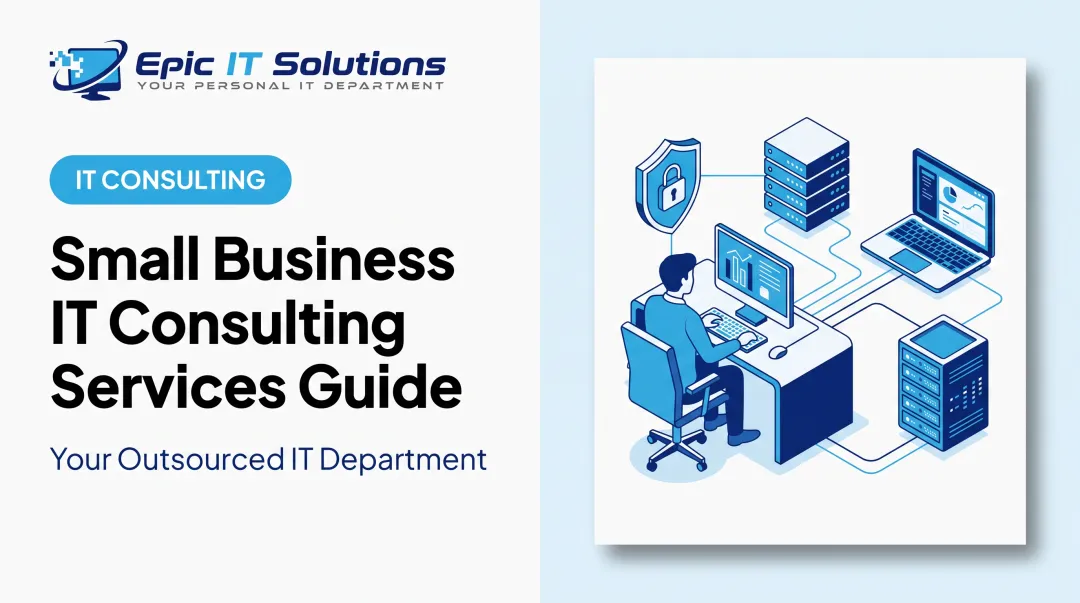
IT strategy consulting evaluates where your technology stands today, defines where it needs to go, and builds a practical roadmap to close that gap. The work is about direction: aligning technology with business goals, not day-to-day fixes like printers or password resets.
A consultant typically looks at two things:
- Current state: infrastructure, security posture, software, and technical debt (the shortcuts and outdated systems that quietly slow a business down)
- Future state: what the business needs technology to support over the next one to three years
This differs from break-fix support. TechTarget defines an IT consultant as someone who helps an organization make technology purchases or strategy decisions, not someone who only resolves an isolated technical issue.
For owner-run businesses without a dedicated IT staffer, this consulting fills a role that a full-time strategist would normally occupy. You get the planning function without the salary.
What Does an IT Strategy Consultant Do?
An IT strategy consultant's job breaks down into five core activities: assessing your current environment, translating business goals into technology plans, building a roadmap, establishing governance, and guiding execution.
Assessing and Translating
First comes an honest look at what you have: infrastructure, software, security posture, and internal processes. This surfaces gaps and risks that day-to-day IT work rarely catches, because nobody's stepping back to look at the whole picture.
From there, the consultant translates business goals (growth, efficiency, compliance) into concrete technology recommendations. If you're planning to double headcount next year, that has direct implications for licensing, network capacity, and device management.
Building the Roadmap
The consultant then builds a phased, budget-aware plan. This typically includes:
- Quick wins: low-cost fixes that reduce immediate risk
- Mid-term projects: infrastructure upgrades, software migrations
- Long-term initiatives: architecture changes tied to multi-year goals

Governance and Execution
Good consulting also establishes decision frameworks so future technology choices stay consistent, rather than leaving each department to decide on its own. The consultant then coordinates with your managed service provider or internal staff to guide execution once the plan is set.
This joint ownership model matters. Gartner's 2024 survey of over 3,000 CIOs found that only 48% of digital initiatives met or exceeded business-outcome targets overall. Among organizations where business and technology leaders co-owned delivery, that figure jumped to 71%, according to Gartner's October 2024 research.

The lesson for small businesses: technology performs better when someone is explicitly connecting it to business outcomes, not just keeping it running.
Key Benefits of IT Strategy Consulting for Small Businesses
Beyond the mechanics, strategy consulting delivers a handful of practical advantages that owner-run businesses notice quickly.
Spending aligns with priorities. CompTIA's 2022 survey of 650 U.S. SMBs found only 52% considered their technology spending appropriate for their business objectives. A roadmap forces that conversation before money gets spent.
Cyber and compliance risk drops through advance planning. Instead of reacting to the latest breach headline, a strategy engagement identifies priorities in advance. According to JumpCloud's 2024 SME IT Trends Report, 72% of SME IT leaders believe security budget cuts would increase their risk.
Tool sprawl gets prevented. Without a plan, businesses accumulate overlapping software and hardware, then pay for emergency fixes when things don't integrate. SMB Group's research found 44% of businesses struggle specifically with integration difficulty.
Making technology calls without a CIO is stressful. A roadmap gives owners a reference point instead of guesswork, so leadership can decide with confidence.
Growth events become manageable. Opening a new location, adding staff, or scaling server infrastructure all create dependencies. Planning ahead means less scrambling when it happens.
IT Strategy Consulting vs. Managed IT Services vs. Basic IT Support
These three services get lumped together constantly, but they solve different problems.
| Service | Focus | Time Horizon | Typical Activities |
|---|---|---|---|
| Basic IT Support | Fix what's broken | Immediate | Repair, troubleshooting, incident response |
| Managed IT Services | Keep systems running | Ongoing/daily | Monitoring, maintenance, help desk, updates |
| IT Strategy Consulting | Plan the direction | Multi-year | Assessment, roadmap, governance, budget planning |

Basic support is reactive by definition. TechTarget describes break-fix as support rendered only after something fails.
Managed services flip that to proactive maintenance, with a provider remotely managing your infrastructure under a defined service level.
Strategy consulting sits above both, answering the question "what should we even be buying, and why?"
Most small businesses need all three. Rather than juggling separate vendors, many bundle these together through one local provider.
Epic IT Solutions offers strategy guidance alongside ongoing managed IT support, cybersecurity, and repair, so businesses aren't stitching together relationships with three different companies for what's really one connected need.
When Does Your Business Need IT Strategy Consulting?
Certain signals point directly to needing a strategic conversation rather than another break-fix call:
- Technology costs feel unpredictable. If spending doesn't seem connected to results, that's a planning gap, not a budget problem.
- You're growing. Adding a location, scaling staff, or expanding server infrastructure all create new dependencies worth mapping out first.
- Leadership wants a multi-year view. Ad hoc decisions pile up fast when nobody owns the bigger picture.
- Compliance requirements are unclear. This hits law firms, biopharma companies, and labs especially hard.
For regulated industries, the stakes are specific. HIPAA requires covered entities and business associates to conduct an accurate risk analysis and implement safeguards that reduce risk to a reasonable level, per HHS's Security Rule summary.
Law firms face a parallel obligation: ABA Model Rule 1.1 expects attorneys to understand the risks associated with technology they use to handle client information.
A strategy consultant doesn't replace legal or compliance counsel, but maps your systems against these requirements and prioritizes what needs attention first.
How Epic IT Solutions Supports Local Businesses with IT Strategy
Epic IT Solutions combines on-site presence across North Central Florida with remote support, giving businesses a flexible way to engage without committing to a full-time hire.
For law firms, biopharma companies, and owner-run businesses without dedicated IT staff, Epic acts as a practical alternative to hiring a full-time IT strategist.
Engagements typically start with a quick assessment that identifies cost reductions and process improvements. That initial project can stand alone or transition into ongoing managed IT support once the roadmap is set.
This flexibility matters for businesses testing the waters:
- Start with a focused strategic project (network design, server planning, backup implementation)
- Move into managed or co-managed IT for ongoing support
- Keep internal control through co-managed arrangements if you already have some IT staff
Whether you're a lab managing sensitive research data or a firm juggling client confidentiality requirements, the goal is the same: technology decisions backed by a plan, not a scramble.
Frequently Asked Questions
What does an IT strategy consultant do?
An IT strategy consultant assesses your current technology, defines where your business needs to go, and builds a roadmap to close that gap. The work centers on aligning technology decisions with business goals, not fixing daily issues.
How is IT strategy consulting different from managed IT services?
Strategy consulting focuses on long-term direction and planning, while managed IT services handle the daily operational work of keeping systems running. Many businesses use both together.
How much does IT strategy consulting cost for a small business?
Costs vary based on project scope, company size, and network complexity. Epic IT Solutions provides custom quotes after an initial assessment, so a direct consultation is the best way to get accurate pricing.
Does IT strategy consulting include cybersecurity planning?
Yes. Assessing your security posture and prioritizing risk reduction is a standard part of most strategy engagements, alongside infrastructure and compliance planning.
When should a small business hire an IT strategy consultant instead of just an IT support company?
Hire a strategy consultant when you're facing growth, unclear compliance requirements, or need a multi-year technology plan. Basic support only addresses problems after they happen.
Can IT strategy consulting help with compliance requirements like HIPAA?
Consultants can map regulatory requirements to your technology systems and prioritize remediation steps. Compliance accountability still rests with the business and its legal counsel, but a consultant clarifies what needs attention first.